If you're planning to build a custom home in Northeast Iowa, you've likely heard about ICF (Insulated Concrete Form) construction and its long-term energy savings.
One of the most common questions we get at Knights Construction Co. is:
“Are there tax credits or incentives for building with ICF?”
The answer is: Yes—there are potential federal, state, and utility-level incentives, but they’re often misunderstood.
Let’s break it down clearly.
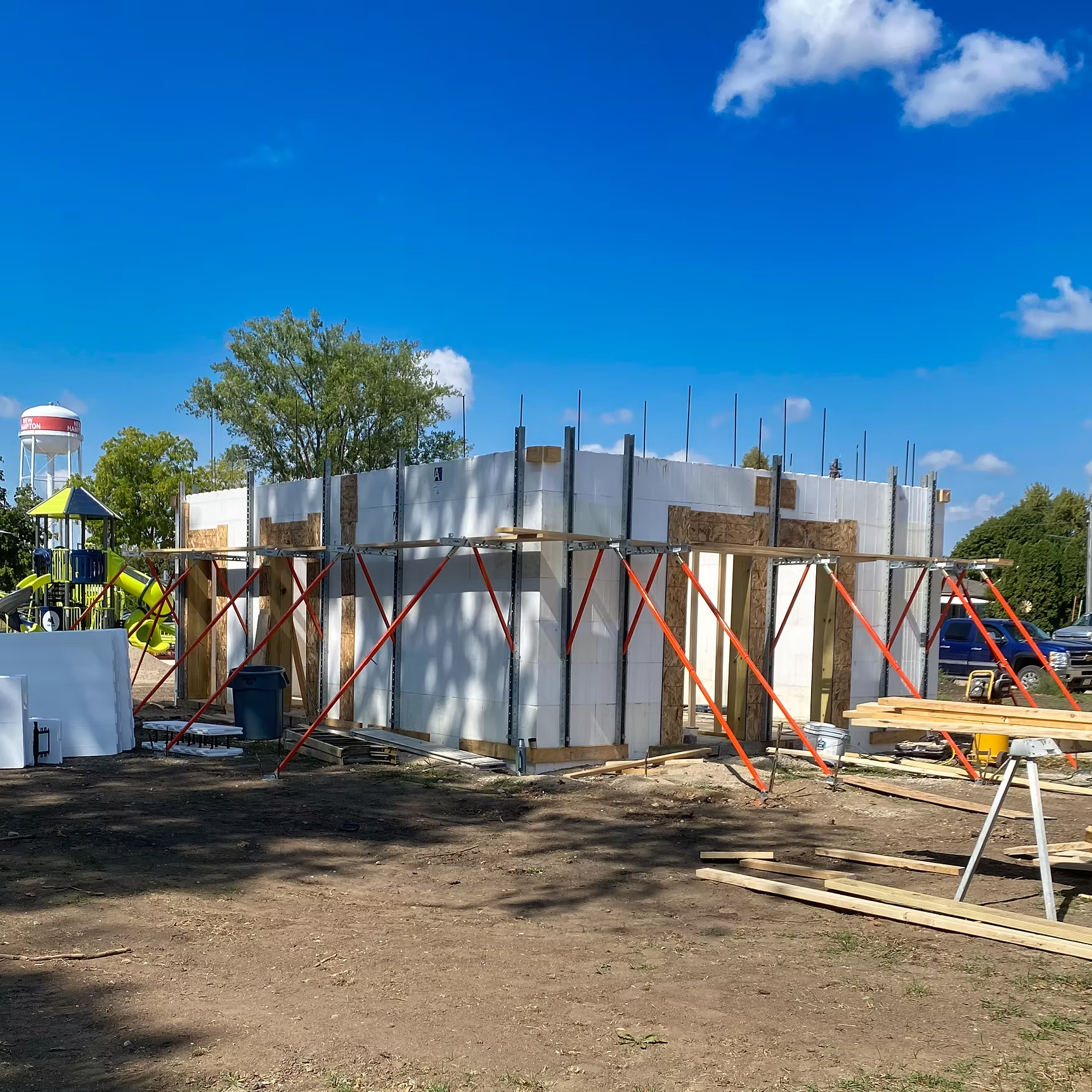
ICF (Insulated Concrete Forms) is a building method where walls are made from reinforced concrete surrounded by continuous insulation.
Compared to traditional wood framing, ICF homes offer:
Learn more about how ICF works:https://www.icfmag.com/what-is-icf/
While there is no ICF-specific tax credit, ICF construction can help homeowners qualify for federal energy efficiency incentives.
1. Energy Efficient Home Improvement Credit (25C)
The IRS offers credits for qualifying energy-efficient upgrades, including insulation improvements.
Official IRS resource:https://www.irs.gov/credits-deductions/energy-efficient-home-improvement-credit
Because ICF walls provide continuous insulation, they can help contribute to overall eligibility.
This applies primarily to builders and developers, but it impacts homeowners indirectly.
Details from the U.S. Department of Energy:https://www.energy.gov/eere/buildings/45l-tax-credit
Homes built with ICF are often better positioned to meet these standards due to their superior thermal performance.
Local Utility Incentives in Iowa
In Iowa, many utility providers offer rebates for energy-efficient construction and upgrades.
Programs may include:
Check available programs here:https://www.dsireusa.org/
(DSIRE is the most trusted national database for incentives and rebates.)
ICF construction stands out because it reduces energy loss significantly.
According to the U.S. Department of Energy:
“Heating and cooling account for roughly 50% of energy use in a typical U.S. home.”https://www.energy.gov/energysaver/heating-and-cooling
Because ICF walls create an airtight and highly insulated structure, homeowners can see:
This is exactly what many incentive programs are designed to reward.
While tax credits are helpful, the real value of ICF construction is long-term performance.
Homeowners choosing ICF often benefit from:
📖 Additional research on energy-efficient homes:https://www.energy.gov/eere/buildings/articles/energy-efficient-home-design
At Knights Construction Co., we help homeowners understand how building decisions impact both upfront cost and long-term value.
While incentives can vary based on:
We guide you through:
ICF construction may not come with a single “one-size-fits-all” tax credit—but it plays a major role in helping homeowners qualify for energy efficiency incentives while delivering long-term savings.
If you’re considering building or planning a custom home, understanding these benefits early can help you make smarter decisions from the start.
If you're exploring a custom home or want to understand whether ICF is the right fit. Reach out to Knights Construction Co. We’ll walk you through your options and help you build with clarity and confidence.